Pull requests have always been a trust exercise. A reviewer reads a diff, mentally simulates what the code does, and either approves or asks questions. Cursor just broke that model open.
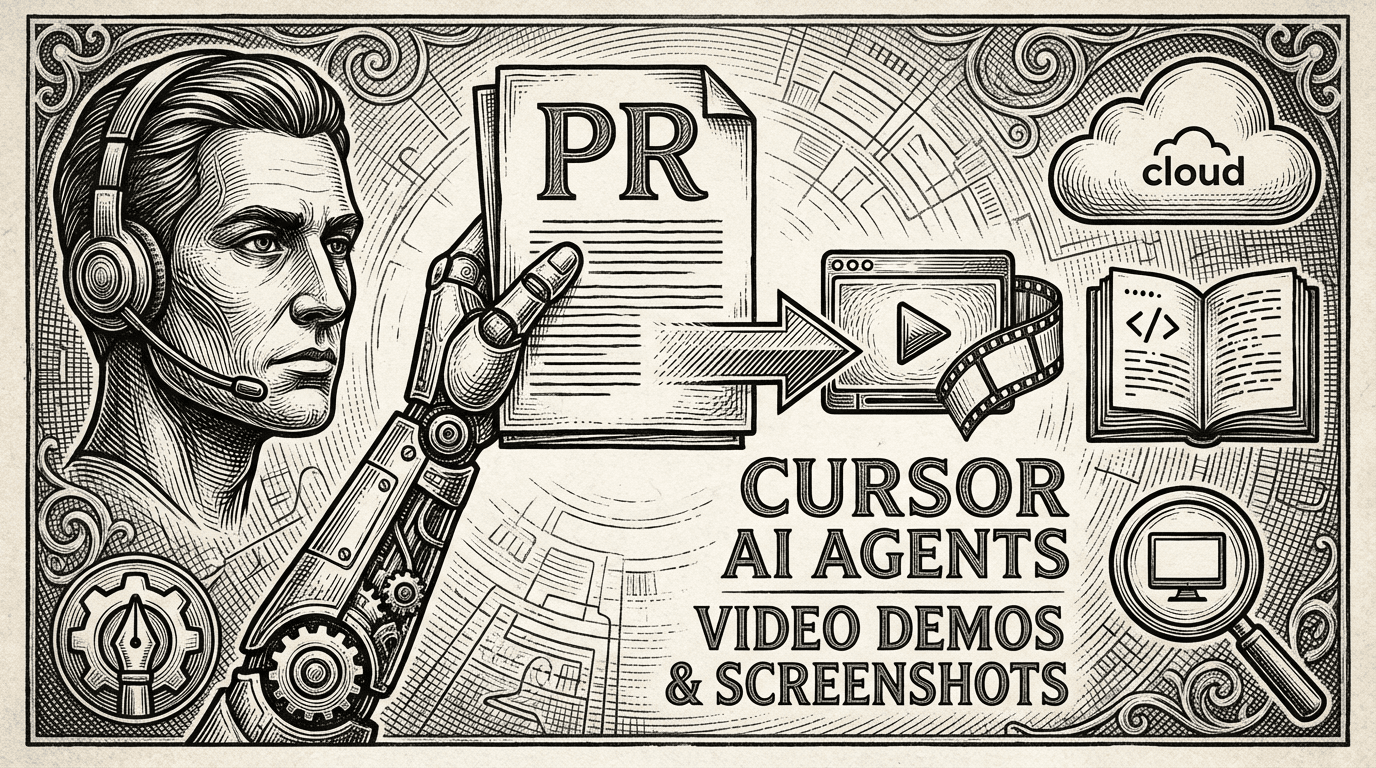
Cursor's cloud agents now have the ability to test their changes and produce artifacts — videos, screenshots, and logs — so reviewers can quickly validate their work, and those agents are accessible from the web, mobile, desktop app, Slack, and GitHub. When the agent finishes, it creates a merge-ready PR with those artifacts attached to demo the changes.
This isn't a minor quality-of-life update. It changes what a PR actually is.
What Cursor Cloud Agents Actually Do
Cloud agents are autonomous AI agents that run in isolated Linux virtual machines in the cloud. You give them a task, they spin up their own environment, onboard to your codebase, write the code, and test it end-to-end before delivering a merge-ready pull request.
The key word there is test. Cloud agents can open browsers, navigate to localhost, click through UI elements, and verify that the code they wrote actually works. When they find a problem, they fix it and test again. When they finish, they record the session — video, screenshots, logs — and attach it all to the PR.
This feature lets AI agents operate in their own isolated virtual machines rather than just interacting with your local development environment. When you launch a cloud agent, it spins up a full development environment in the cloud — an isolated VM with everything needed to build, test, and verify software.
How the PR Artifact System Works
The flow from task to PR is more structured than it sounds. Each agent gets a fresh Ubuntu-based VM with common development tools pre-installed, clones your repo including submodules, can install npm packages or pip requirements, has network access to clone packages and navigate to localhost servers, and stores videos and screenshots that get linked directly in the generated PR.
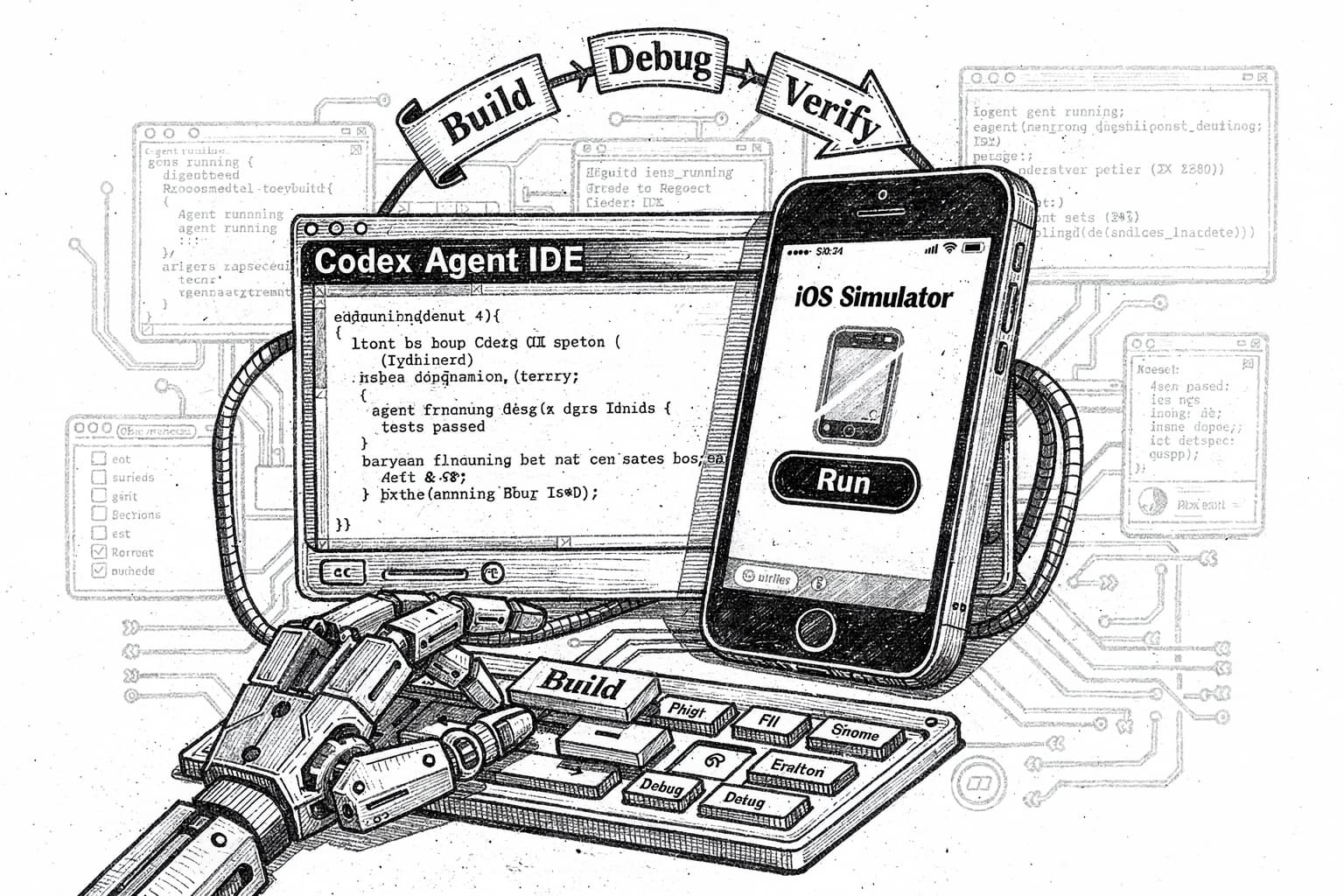
After writing code, the agent can start the app, click through it, run the test suite, check that the feature actually works, and record video, screenshots, and logs as artifacts.
Instead of mentally simulating a diff, reviewers watch a 30-second video of the feature in action. PRs include screenshots and logs alongside code changes. Reviewers get visual evidence, not just diffs.
Cursor's own blog gives a concrete example of this in practice. A cloud agent was kicked off from Slack to triage a clipboard exfiltration vulnerability. When it finished, it responded in the Slack thread with a summary. It built an HTML page to exploit the vulnerability via an exposed API, started a backend server to host a demo page locally, and loaded the page in Cursor's in-app browser. The video artifact shows the complete attack flow.
That's a real security audit, not a demo. The agent built the exploit, verified it worked, filmed itself doing it, and attached the recording to the PR.
The Numbers Behind the Feature
More than 30% of the PRs Cursor merges internally are now created by agents operating autonomously in cloud sandboxes. That number has been cited consistently across Cursor's official communications and is worth taking seriously. That's not a demo metric. That's production code shipping to millions of users.
Cursor has also published research showing hundreds of agents collaborating on a single codebase for weeks, writing over 1 million lines of code across 1,000 files — including building an entire web browser from scratch.
The video and screenshot artifacts are what make that scale reviewable. When one developer can direct 10 to 20 parallel agents, the volume of PRs hitting the review queue multiplies. Video artifacts help — watching a 30-second demo is faster than reading 500 lines of diff — but teams will need to rethink their review processes.
Cursor 3 Brings It All Together
Cursor 3 launched April 2, 2026, with a new Agents Window, Design Mode, and cloud agents. The PR artifact feature isn't standalone — it's part of a broader rearchitecture of how Cursor handles agent work.
Cursor 3 is a unified workspace for building software with agents. The new interface brings clarity to the work agents produce, pulling developers up to a higher level of abstraction. It's faster and more powerful, with a multi-repo layout, seamless handoff between local and cloud agents, and the option to switch back to the Cursor IDE at any time.
Git is now native to the Cursor interface. Staging, committing, and creating pull requests happen directly inside Cursor 3 without switching to a terminal or external tool. The entire flow from code change to merged PR can stay inside one window.
The agents can also be triggered from outside the editor entirely. Cloud agents can be launched from outside the IDE: Slack, GitHub, Linear, mobile devices, or the web. An agent can be kicked off from a GitHub issue and you can check its progress from your phone.
What This Means for Code Review
The implications for how teams do code review are real and worth thinking through carefully.
CI/CD pipelines need to account for agent-generated PRs. The agents produce merge-ready code, but "merge-ready" means the agent validated it in its sandbox. Your pipeline still needs to run its own tests and enforce your standards. Teams with strong CI benefit immediately. Teams without it will find that autonomous agents amplify existing gaps.
Mitch Ashley, VP and practice lead for software lifecycle engineering at The Futurum Group, put it directly: "The operational implications are important to recognize. CI/CD pipelines, review workflows, and governance frameworks must treat agents as first-class delivery actors. Platforms enabling developers to orchestrate agent-driven development at scale will define a new competitive divide in software engineering."
The video and screenshot artifacts aren't just nice-to-have — they're your window into what the agent actually did. Watch them to catch issues you might miss in code review.
Pricing and Availability
Cursor Pro is $20 per month, and the price has not changed with Cursor 3. Parallel agents, cloud execution, Design Mode, and built-in Git are all behind the $20/month paywall.
As of March 2026, background agents require GitHub. GitLab and Bitbucket are not officially supported for the clone-and-push workflow. That's a meaningful constraint for teams not on GitHub, and worth checking before committing to the feature.
Self-hosted cloud agents will soon be able to demo their work by producing videos, screenshots, and logs for review. Users will also be able to take over the agent's remote desktop and use it to run automations.
Final Thoughts
The PR artifact system is the most practically useful thing Cursor has shipped in a while. It's not that the AI writes better code now — it's that you can actually see what the AI built before you merge it. That's a different kind of trust than reading a diff and hoping.
What I'd watch next is how teams adapt their review culture to this. Now that agents can handle most of the implementation, the role of a developer is more about setting direction and deciding what ships. Cursor is building toward a future of self-driving codebases, where agents merge PRs, manage rollouts, and monitor production. That's a long arc, but the artifact-attached PR is a concrete step toward it that you can use today.
The 30% internal PR figure is the number I keep coming back to. Cursor is eating its own cooking here, and that matters for credibility. If you're on Pro and haven't tried a cloud agent task yet, this is a good reason to start.
What do you think? Are video-attached PRs the future of code review, or does this create new problems for your team? Drop your thoughts in the comments.
Frequently Asked Questions
What types of artifacts do Cursor cloud agents attach to pull requests?
Agents attach video recordings of their work, screenshots of the running application, and logs from the session. These are stored and linked directly inside the generated PR on GitHub.
Do I need a special Cursor plan to use cloud agents with PR demos?
Yes. Cloud agents, parallel execution, and the Agents Window are available on the Cursor Pro plan at $20/month, as well as on Teams and Enterprise tiers.
Which version control platforms are supported?
As of March 2026, Cursor cloud agents officially support GitHub for the clone-and-push workflow. GitLab and Bitbucket are not yet officially supported.
Can I still review the code manually after an agent opens a PR?
Yes. The standard PR review process applies. The video and screenshot artifacts supplement the diff — they don't replace it. Your existing CI/CD pipeline also runs independently of what the agent validated in its sandbox.
How do I access the Agents Window in Cursor 3?
Update Cursor to the latest version, then press Cmd+Shift+P (or Ctrl+Shift+P on Windows) and type "Agents Window." You can run it alongside the IDE or switch between them freely.