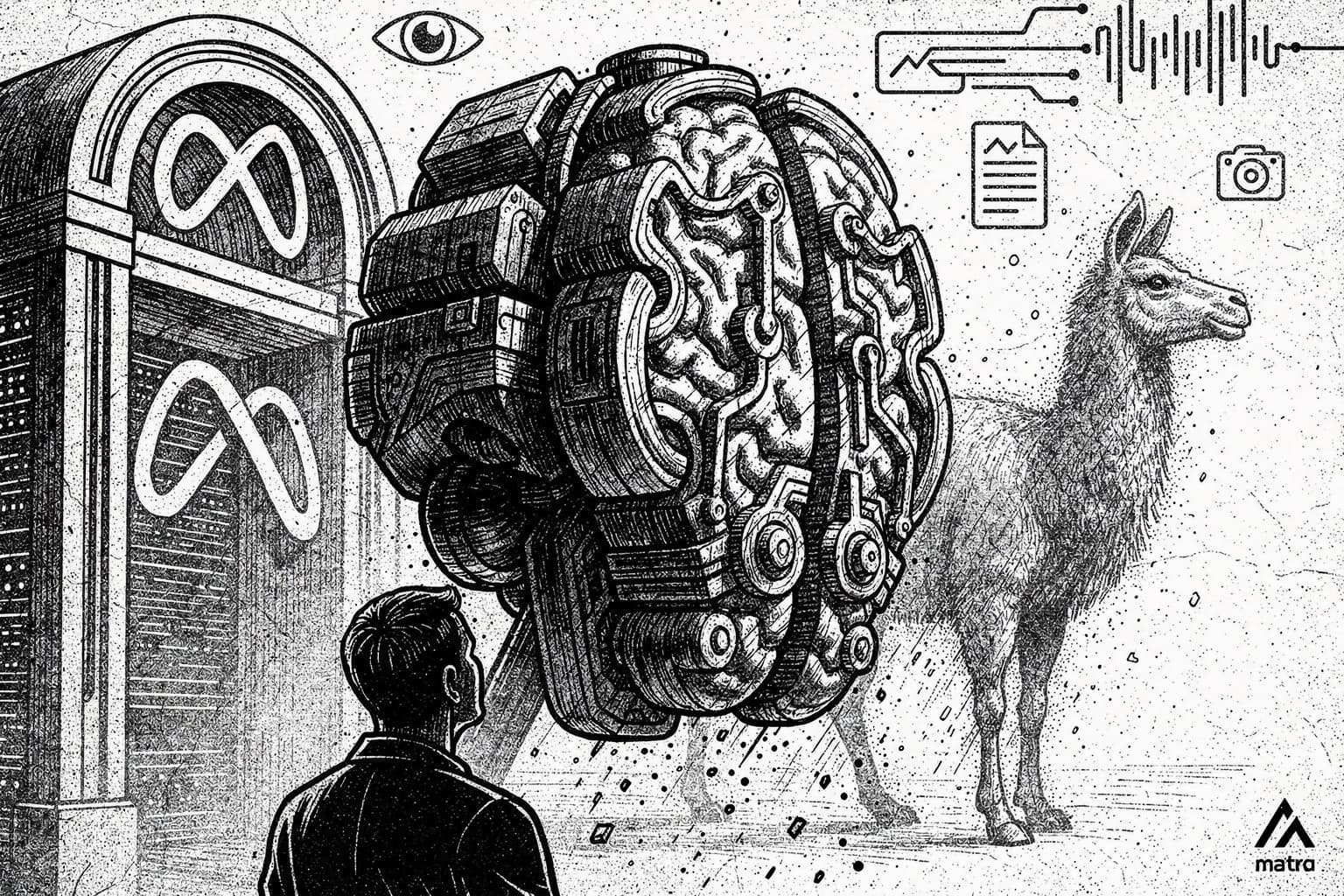
Nine months after acquiring Scale AI for $14.3 billion and installing Alexandr Wang as chief AI officer, Meta shipped the first product from its Superintelligence Labs. The model, called Muse Spark, represents a hard pivot for a company that spent years championing open weights development.
Instead of dropping another Llama release, Meta is keeping Muse Spark proprietary. It will replace the Llama 4 architecture across WhatsApp, Instagram, and Meta smart glasses. Seeing them lock down this release tells me the strategy has shifted toward direct monetization.
What Is Muse Spark?
Muse Spark is a multimodal reasoning model designed to be small and fast. Meta built it to process text, voice, and image inputs natively. The company prioritized health and science reasoning by working with physicians to train the system on medical queries.
The standout feature is Contemplating Mode. When faced with a complex prompt, Muse Spark spins up multiple subagents in parallel. If you ask it to plan a vacation, one agent drafts the itinerary while another finds activities for children.
Key Technical Highlights
The Superintelligence Labs team rebuilt the Meta AI stack from scratch.
- Multimodal perception: The model analyzes visual data to let users estimate calories from a photo.
- Parallel subagents: Contemplating Mode pits agents against each other to solve hard problems.
- Private preview: Meta is restricting API access to select partners instead of releasing weights publicly.
Performance and Benchmarks
Independent testing places Muse Spark in a dead heat with frontier models in some categories. It tied for fourth place on the Artificial Analysis index. The model competes directly with Opus 4.6 and GPT 5.4 in visual understanding.
The system struggles with coding tasks and abstract reasoning tests like ARC AGI. Meta positions Muse Spark as a foundational step while noting that larger models are already training.
Final Thoughts
The shift away from open weights is the real story. Meta spent billions commoditizing the AI layer with Llama, but Muse Spark signals a desire for a proprietary product stack. The multiagent capabilities look practical, but locking developers out is a massive reversal.
The superintelligence team has proven they can ship a competitive model. The next question is whether users actually want parallel AI agents inside their social feeds.
Frequently Asked Questions
What makes Muse Spark different from Llama? Muse Spark is a proprietary and multimodal model built by the Meta Superintelligence Labs, whereas Llama was open weights.
How does Contemplating Mode work? The model launches multiple subagents simultaneously to handle different parts of a complex task in parallel.
Is Muse Spark available to the public? It is currently available on the Meta AI app in the United States with API access restricted to partners.